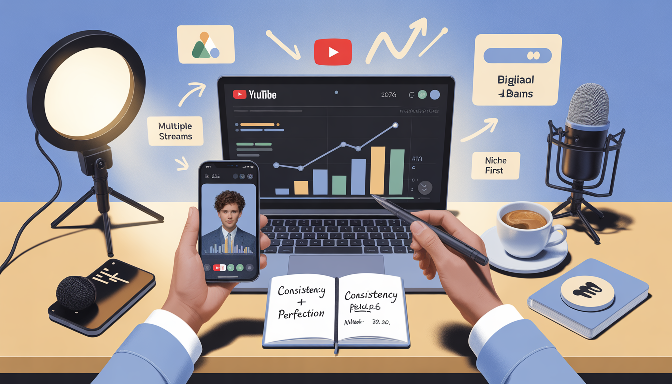



Let’s get the most important thing out of the way first: you can make real money online without spending a single rupee or dollar upfront. But it takes time, skill, and consistency — not a magic system or a paid course that promises overnight results.




This guide is written for people who are starting from zero. No savings to invest, no existing audience, no special equipment. Just a phone or a laptop, an internet connection, and the willingness to put in actual effort. The methods covered here are legitimate, proven, and genuinely free to start.

Why “Free” Matters — And What It Actually Means
When people search for ways to make money online without investment, they’re often burned by results that technically start free but quickly push you toward buying something — a premium subscription, a paid course, a “starter kit.”
None of that here. Every method in this article can be started and grown without spending money. Some of them you can begin today, within the hour. Others take weeks or months to build before income arrives. Both types are worth understanding.
The honest truth is that “free” usually means trading time instead of money. That’s a fair trade when you’re starting out. Time is something most people can spare more easily than cash.
1. Freelancing: Selling Skills You Already Have
Freelancing is one of the most reliable ways to start earning online without any upfront cost. You’re essentially offering a service — writing, design, video editing, data entry, translation, social media management — and getting paid per project or per hour.
You Probably Already Have a Marketable Skill
Most people underestimate what they can offer. Can you write clearly in English? That’s a skill. Can you make basic graphics? That’s a skill. Are you fluent in two languages? Translators are in constant demand. Good at organizing spreadsheets? Businesses need that.
The starting point is identifying what you can do reasonably well — not perfectly, just well enough to deliver value to someone who can’t or won’t do it themselves.
Getting Your First Client Without a Portfolio
This is the part that stops most beginners. No portfolio, no clients. No clients, no portfolio. It feels like a loop with no entry point.
Here’s how to break it: do one or two small jobs for free or at a very low rate, specifically to build samples. A student in Nagpur offered to write three blog posts for a local business owner’s website for free. Those three posts became her portfolio. Within a month, she had two paying clients at ₹1,500 per post.
Platforms where you can create a profile at no cost and start bidding on work exist across different freelancing categories. The key is to start small, deliver well, collect a review, and build from there.
What Pays Well for Beginners
Writing and content creation, basic graphic design, video editing (even simple cuts and captions), virtual assistance, social media scheduling, and data entry are all accessible entry points. None require expensive tools — free versions of design software, free video editors, and standard word processors are enough to start.
Authority link placement suggestion: Under this section, linking to the Wikipedia article on freelancing provides neutral background on how the freelance economy works and adds credibility for readers new to the concept.
2. Content Creation: Building Something That Earns Over Time
Content creation — blogging, YouTube, podcasting, Instagram — takes longer to monetize than freelancing. But once it’s built, it can generate income even when you’re not actively working. That’s the appeal.
Blogging: Still Relevant, Still Free to Start
A blog costs nothing to start on free platforms. The barrier isn’t technical — it’s commitment. Most blogs that fail do so because people quit after three months when traffic hasn’t appeared yet.
A blog earns money primarily through display advertising (which kicks in once you have decent traffic), affiliate links, and eventually sponsored content. None of those require investment to set up.
A teacher in Bhopal started a blog about home cooking on weekends. She posted one recipe article per week for eight months before her traffic started growing meaningfully. By month twelve, her display ad earnings were covering her phone and internet bill. Modest, but real — and growing.
The key insight: blogging is a long game. If you’re expecting income in the first three months, you’ll be disappointed. If you’re thinking in terms of 12–18 months, it’s a genuinely viable path.
YouTube: Higher Effort, Higher Ceiling
YouTube requires more production effort than a blog, but it’s free to start. A decent smartphone camera is enough for most niches, and free editing software handles basic cuts and captions. YouTube monetization (through its Partner Program) kicks in once you hit specific watch-hour and subscriber thresholds — but affiliate income and brand deals can arrive before that.
A college student in Hyderabad started a YouTube channel explaining computer science concepts in Telugu. He posted inconsistently for the first four months, then committed to one video per week. By month eight, he crossed the monetization threshold. A year later, his channel income was supplementing his family’s income meaningfully.
Consistency — not production quality, not equipment — is the single biggest factor in whether a YouTube channel grows or dies.
Writing on Publishing Platforms
Several platforms pay writers directly based on how many people read their work. Medium’s Partner Program, for example, pays writers based on reading time from paying members. It’s not a full income for most people, but it’s a real one — and it costs nothing to join and start publishing.
A writer in Pune who’d never been published anywhere earned her first ₹3,000 equivalent in a single month from Medium after writing six in-depth personal finance articles. She reinvested zero rupees to get there.
3. Affiliate Marketing: Earning Commissions Without a Product
Affiliate marketing means you promote someone else’s product and earn a percentage of every sale made through your unique link. You don’t handle inventory, customer service, or payment processing. You just connect buyers with products.
How to Start Without a Following
Most people assume you need a large audience to do affiliate marketing. You don’t — not at first. You need traffic of some kind, which can come from a blog, a YouTube channel, a Pinterest account, or even well-placed answers on Q&A platforms.
Writing detailed, honest answers to common questions on platforms where people search for advice — and naturally including relevant affiliate links where appropriate — is a legitimate, free traffic strategy. A person in Coimbatore who answers personal finance questions regularly and links to relevant financial tools has built a small but consistent affiliate income this way.
Which Affiliate Programs Cost Nothing to Join
Most reputable affiliate programs are free to join. E-commerce affiliate programs across major Indian and international platforms all offer this. Individual brands — especially in the digital products space — often have affiliate programs paying 20–40% commissions, far more than physical product programs.
Be Honest or Don’t Bother
Affiliate marketing only works long-term if you recommend things you’ve actually tried or genuinely believe are good. Recommending garbage products for a commission is a fast way to destroy trust and a slow way to make money. The creators with consistent affiliate income are the ones whose audiences trust them completely.
4. Online Tutoring and Teaching
If you know something well enough to explain it clearly, you can get paid to teach it online. This requires zero investment beyond your time and knowledge.
What You Can Teach
Academic subjects are the most obvious — maths, science, English, competitive exam preparation. But teaching opportunities extend far beyond academics. People pay to learn cooking, music, spoken English, coding basics, yoga, drawing, and dozens of other skills.
A retired schoolteacher in Mysuru started taking online tutoring sessions for CBSE students via video call. She charged ₹300 per hour initially, then raised her rates as demand grew. Within six months, she had a full schedule of twelve students per week and a waitlist.
Creating and Selling Online Courses
If live tutoring isn’t your preference, recorded courses are another option. Several platforms allow you to upload and sell courses for free — they take a commission on sales rather than charging upfront fees. That’s a genuinely zero-investment model.
The barrier to creating a course is lower than most people think. A clear outline, decent audio (a ₹500 lapel mic helps but isn’t essential), and screen recording software (free options exist) are enough to start. Content quality matters far more than production quality in most niches.
Authority link placement suggestion: Under the tutoring section, a reference to the Wikipedia article on e-learning or distance education adds useful context about the growth of online education and lends credibility to this section.
5. Selling Services on Social Media
You don’t need a website or a storefront to sell a service. A well-maintained Instagram, LinkedIn, or even WhatsApp Business account can be enough to attract clients when you’re starting out.
LinkedIn for Professional Services
LinkedIn is consistently underused by people in India and other emerging markets. If you have any professional skill — HR consulting, accounting support, legal drafting, content writing, career coaching — a strong LinkedIn presence can bring clients without spending anything.
An HR professional in Ahmedabad who was between jobs started posting weekly insights about recruitment and workplace culture on LinkedIn. Within two months, two small companies had approached her for consulting work. She charged per-project fees and worked from home.
The approach is simple: share what you know, be genuinely helpful, and let people find you through the value you provide.
WhatsApp and Local Networks
Don’t overlook your immediate network. Many first clients come from people who already know you, or know someone who knows you. A graphic designer in Indore got his first three paid logo projects from a single WhatsApp message to his college batch group.
Starting local and small isn’t a failure. It’s often the fastest path to the first income — and first income builds confidence to keep going.
6. Microtask and Survey Work: Low Pay, Low Barrier
This category deserves an honest mention — not as a primary income strategy, but as a starting point when you need to see actual money arrive quickly.
What Microtask Work Actually Pays
Platforms that pay for completing small tasks — categorizing images, transcribing short audio clips, testing websites, answering surveys — offer low pay. We’re talking ₹50–₹300 per hour in most cases, sometimes less. It’s not a living. But it’s real money that arrives quickly, and for someone who’s never made money online before, that first payment matters psychologically.
Use It as a Bridge, Not a Destination
The right way to think about microtask work is as a bridge. It proves to you that online income is real. It gives you something to do while a longer-term strategy (blogging, freelancing, tutoring) is being built.
A student in Ranchi used survey and microtask income to cover her data recharge costs for three months while she was building her freelance writing profile. Once the writing income started, she stopped the microtask work entirely. That’s exactly how it should be used.
7. Reselling and Dropshipping Without Inventory
You can sell physical products online without holding any inventory — and without spending money upfront. The model is called dropshipping: you list products, collect payment, and the supplier ships directly to the customer. Your profit is the margin between what you charged and what the supplier charges.
Starting Without a Website
Marketplaces allow sellers to list products without building a website. Social media-based reselling — listing products in WhatsApp groups, Instagram Stories, or Facebook Marketplace — costs nothing and requires no technical knowledge.
A homemaker in Surat started reselling ethnic wear from wholesale suppliers through her WhatsApp contacts. She collected orders, paid the supplier, and had items shipped to buyers. Her startup cost was ₹0. She made her first profit of ₹2,400 in the first week.
The Limitation to Know About
Reselling margins can be thin, and customer service falls on you even if the supplier causes problems. It’s not passive income — it requires active management. But as a starting point with zero investment, it’s genuinely viable.
8. Transcription, Translation, and Data Work
These are often overlooked but steadily paying categories of online work that require no investment — just attention to detail and language skills.
Transcription
Transcribing audio or video content into text is something many businesses need and few people enjoy doing. If you can type fast and listen carefully, transcription work is available in multiple languages. Pay is typically per audio minute or per word.
Translation
Fluency in two languages is a genuinely valuable skill in the online economy. Legal documents, marketing materials, subtitles, app interfaces — translation demand is enormous and growing. Professional translation pays better than most entry-level online work.
A bilingual graduate in Lucknow who speaks Hindi and English fluently started taking freelance translation projects. She charged ₹1 per word initially. After building a portfolio and a few reviews, she raised her rate to ₹2.50 per word. Working part-time, she earns more from translation than her peers earn from full-time internships.
What Genuinely Doesn’t Work
It’s worth being direct about the things that are widely advertised as free income opportunities but rarely deliver:
Paid-to-click sites: These pay fractions of a penny per click. The math never works out to meaningful income, no matter how many hours you put in.
Pyramid and MLM schemes advertised as “free to join”: The structure is designed to make the people at the top wealthy. Most participants earn little to nothing. The fact that entry is free doesn’t change the math.
“Secret systems” sold through social media ads: If someone is spending money to advertise their income method to you, it’s because selling you the method is the income. Treat these with extreme skepticism.
The legitimate paths all have one thing in common: they require you to provide genuine value to another person. That’s the filter. If you can’t clearly identify who you’re helping and how, it’s probably not a real opportunity.
Building Momentum: The First 90 Days
The hardest part of making money online isn’t finding the right method. It’s staying consistent long enough for the method to start working. Here’s a practical framework:
Days 1–7: Choose one method based on your existing skills and how quickly you need income. Freelancing and tutoring pay the fastest. Blogging and YouTube take the longest. Set up whatever profile or account is needed.
Days 8–30: Deliver your first piece of work or publish your first content. Focus entirely on quality and completion — not perfection. One good thing done beats three perfect things planned.
Days 31–60: Get feedback. Improve. Repeat. If you’re freelancing, pitch five potential clients per week. If you’re creating content, post on a fixed schedule without exception.
Days 61–90: By now you should have either made some income or have a clear sense of what’s blocking you. Adjust based on real evidence, not assumptions.
Most people quit somewhere in the 30–60 day window, when effort is high and results are still small. The people who push through that window are the ones who eventually look back and say it was worth it.
One Final Thought
Making money online for free is real. Thousands of people do it every day, starting from exactly where you are right now — no money, no audience, no special advantage.
But it’s not fast and it’s not automatic. It rewards people who pick something specific, learn it properly, and show up consistently. That’s genuinely all it takes. The internet is large enough that if you do good work, eventually the right people find you.
Start with one method. Do it seriously. Give it time.